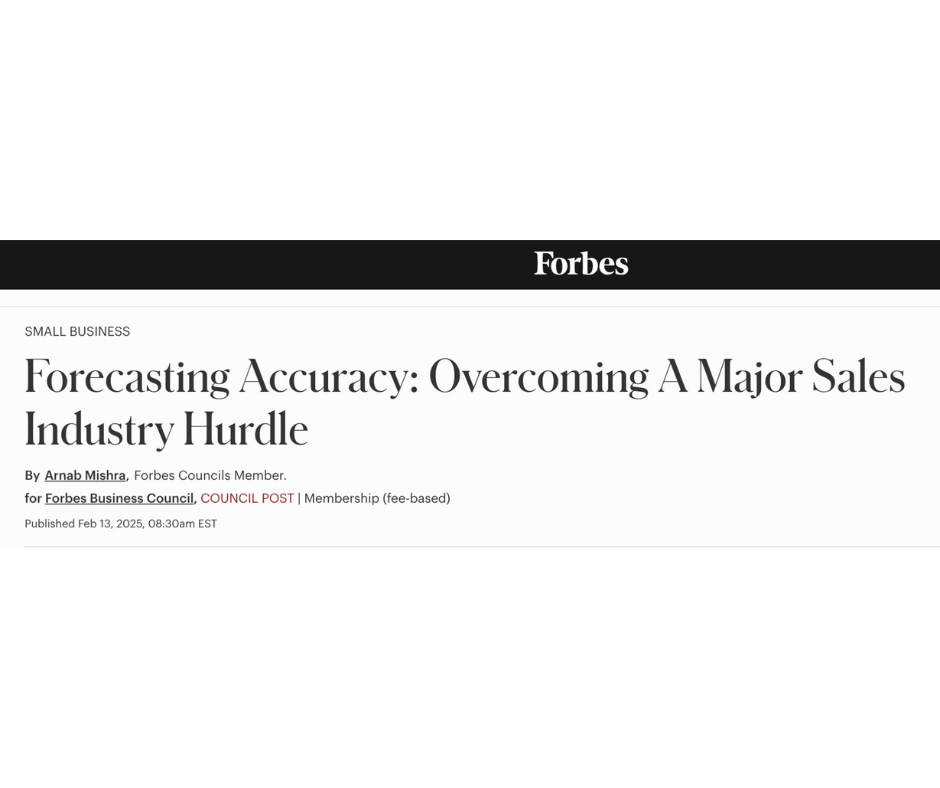
I came across a recent 𝗙𝗼𝗿𝗯𝗲𝘀 article on forecasting accuracy that really resonated. It described forecasting as one of the toughest, most persistent hurdles in sales — something that technology still hasn’t solved.
The piece cited 𝗚𝗮𝗿𝘁𝗻𝗲𝗿 𝗿𝗲𝘀𝗲𝗮𝗿𝗰𝗵 showing that 67% 𝘰𝘧 𝘴𝘢𝘭𝘦𝘴 𝘰𝘱𝘦𝘳𝘢𝘵𝘪𝘰𝘯𝘴 𝘭𝘦𝘢𝘥𝘦𝘳𝘴 𝘣𝘦𝘭𝘪𝘦𝘷𝘦𝘥 𝘤𝘳𝘦𝘢𝘵𝘪𝘯𝘨 𝘢𝘤𝘤𝘶𝘳𝘢𝘵𝘦 𝘧𝘰𝘳𝘦𝘤𝘢𝘴𝘵𝘴 𝘩𝘢𝘥 𝘣𝘦𝘤𝘰𝘮𝘦 𝘩𝘢𝘳𝘥𝘦𝘳 𝘵𝘩𝘢𝘯 𝘪𝘵 𝘸𝘢𝘴 𝘪𝘯 2020. Harder, not easier — despite the explosion of data and AI tools.
That says a lot about where we are as an industry. We’ve built increasingly complex systems to 𝘮𝘦𝘢𝘴𝘶𝘳𝘦 the pipeline, but many teams have lost touch with the human signals that 𝘥𝘳𝘪𝘷𝘦 it.
AI can absolutely help — it’s part of the answer. But if we’re not careful, it can also widen the gap between leaders and the reality of what’s happening in their deals. We end up automating the illusion of control instead of improving it.
The challenge now isn’t to find smarter models. It’s to bring those models closer to the truth of how deals actually unfold — the judgment, the context, the conversations that no algorithm can see.
Worth a read for anyone leading a sales organisation right now.